
Master in Sports Physiotherapy
Private degree issued by Universidad Europea de Madrid
Classes in English | Villaviciosa de Odón | Start: October 2026 | Faculty of Medicine, Health and Sports | Escuela Universitaria Real Madrid Universidad Europea | 60 ECTS |
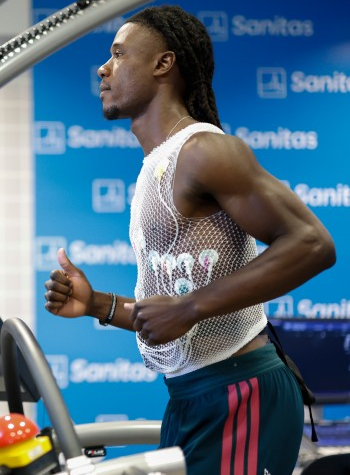
The Private Master’s Degree in Exercise and Sports Physiotherapy at Escuela Universitaria Real Madrid Universidad Europea is a 9-month programme designed to provide you with a comprehensive and practical understanding of sports physiotherapy.
It covers every stage of the process, from injury prevention and diagnosis to recovery and return-to-play, preparing you to work with athletes at all levels, from amateur to elite.
What will you learn during the master’s programme?
- Understand the physiological foundations of sports training and learn to design effective training programmes.
- Gain knowledge in sports nutrition, psychology, medicine, podiatry, and emergency care, addressing the athlete’s needs from a multidisciplinary perspective.
- Develop strategies for injury prevention and planning safe return-to-play processes, through functional assessment and rehabilitation models.
- Master advanced techniques such as manual therapy, myofascial release, taping methods, therapeutic exercise, hydrotherapy, ultrasound imaging, and pain management based on neuroscience.
Live the Real Madrid experience. during the program, you will have the opportunity to choose an international trip, where you will get to know how other countries work.
Discover our official Master's Degree in Spanish: Máster Universitario en Fisioterapia Deportiva
The quality you deserve

Shanghai Ranking
Our faculty is ranked among the top 30 in the world, according to the prestigious 2025 Academic Ranking of World Universities by Shanghai Ranking.

World Confederation for Physical Therapy
Universidad Europea is the only institution in Spain recognised by the World Confederation for Physical Therapy (WCPT). This quality seal guarantees that we meet the most rigorous international standards of academic excellence.

National Sports Award
Escuela Universitaria Real Madrid Universidad Europea was honoured with the National Sports Award "Copa Stadium" for its outstanding contribution to education, research, and the professionalization of sport at both national and international levels.
Much more than a master
As part of our commitment to specialised, cutting-edge training, the master incorporates certifications from Escuela Universitaria Real Madrid Universidad Europea:
Therapeutic pilates
Therapeutic pilates is a discipline combining exercises designed to improve posture, balance, and muscle strength. It is effective because it involves dynamic, controlled stretching of specific muscle groups. There are two main types of practice: mat pilates, where exercises are performed on a mat using bodyweight for resistance; and pilates with machines, which uses apparatus such as the reformer, cadillac or barrels to offer different types of resistance and support.
EPTE (percutaneous therapeutic electrolysis
Is an innovative technique that uses microcurrents applied via an ultrasound-guided acupuncture needle. This technique enables physiotherapists to access injured soft tissue precisely, thus stimulating its natural regeneration process. The application of a galvanic current together with the mechanical stimulation of the needle generates a controlled physical reaction in the tendon, providing a therapeutic effect in the field of physiotherapy.
Dry needling
Dry needling is an invasive technique involving the insertion of a sterile needle into the affected area without the application of any substance, hence the name. Unlike electropuncture, this technique does not use an electric current. The main objective is to deactivate myofascial trigger points, thereby contributing to pain relief and reducing muscle tension.
Recovery of sports injuries in an aquatic enviroment
This involves planning and supervising exercises performed in water to take advantage of its physical properties for therapeutic purposes. It is based on two fundamental principles: mechanical principles, which include hydrostatic, hydrodynamic and hydrokinetic factors. Flotation enables the tissues to be worked with less load and tension, movement to be facilitated or resisted within the water, and pressurised water to be used to achieve effects similar to massage therapy. Thermal principles are applied through the use of hot water. These help to reduce pain, promote vasodilation and generate sedative and antispasmodic effects, improving tissue elasticity and reducing joint stiffness.

Our graduate school
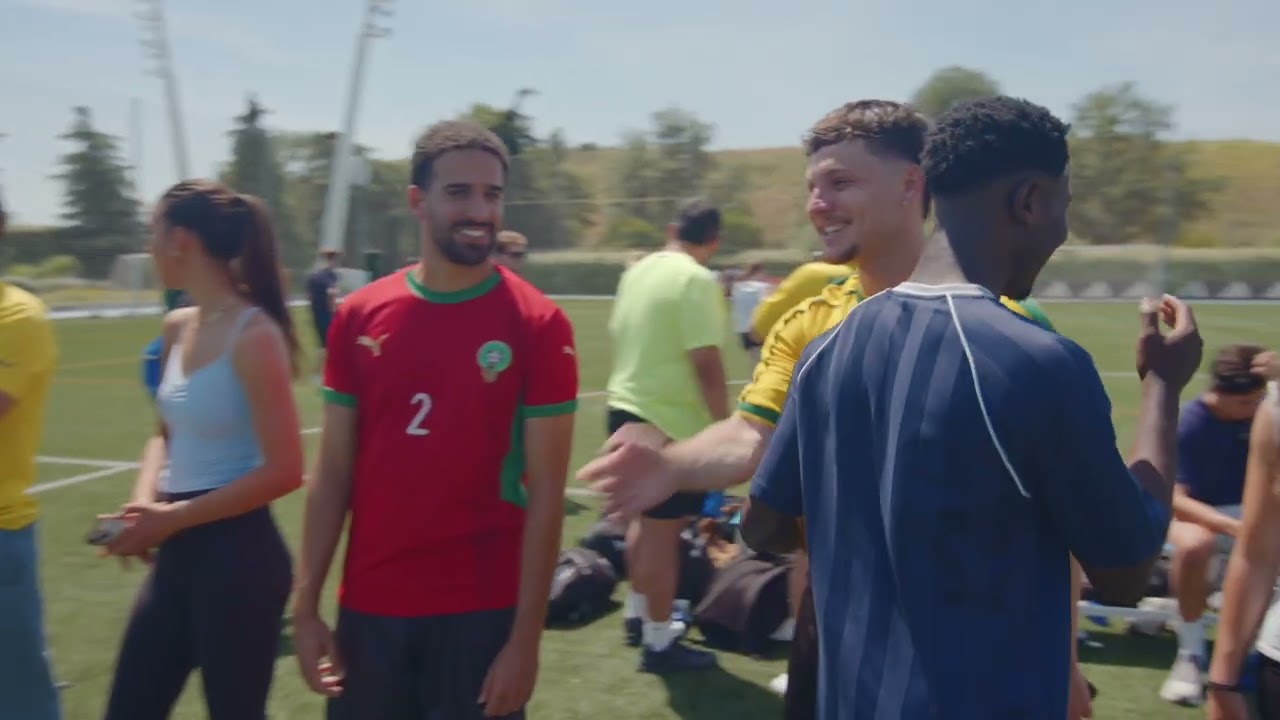
Facilities

Campus of Madrid (centro)
Santiago Bernabéu Stadium
Santiago Bernabeu Stadium, a Football History Monument

Campus of Madrid (centro)
Real Madrid City
The best Training Ground in the world

Campus of Villaviciosa de Odón
I-SHAPE
Sports, Health, and Performance Excellence

AI for talent
AISports artificial intelligence in sports. During the master’s programme, you’ll have the opportunity to join the AISports initiative, taking part in workshops and training sessions with industry experts who will guide you in using cutting-edge tools.
Discover how artificial intelligence is transforming the world of sports health through real-world examples, test your knowledge, and earn your official AISports digital badge.
Study plan
Study plan structure
Module I. The athlete’s physiological environment: training
- Physiological basis of sports training
- Training programming
Module II. Multidisciplinaries sciences
- Sports nutrition
- Sport psychology
- Sports emergencies
- Sports podiatry
- Sports medicine
Module III. Prevention and planning the return to play after a sports injury
- Epidemiology and prevalence of sports injuries
- Individual functional analysis of athletes
- Program for sports injuries according to changes in structure and functional ability
- Return to play models
- Functional rehabilitation, motor control and physical-sport readaptation
Module IV. Diagnosis and esencials methods of sports physiotherapy
- Conservative approach to myofascial pain.
- Myofascial pain in sport: clinical diagnosis an conservative approach
- Chronic pain in sport
- Functional taping
- Kinesio taping
- Electrotherapy
- Therapeutic exercise and mobility
Module V. Diagnosis and methods of sports physiotherapy
- Hydrotherapy
- Manual sports therapy
- Myofascial release
- Rehabilitative ultrasound imaging
- Neuroscience and pain
- Tendinopathy approach
- Global active stretching
Module VI. Master's thesis
What you will learn semester by semester
1
Semester I
- Understand the physiological basis of sports training and how to program safe and effective training loads.
- Explore complementary sciences: sports nutrition, psychology, emergency care, podiatry, and sports medicine.
- Study the epidemiology and prevalence of sports injuries to identify risk factors and trends.
- Perform individual functional assessments to evaluate each athlete’s physical condition.
- Learn return-to-play models and strategies for safe reintegration into sport.
- Master the principles of functional rehabilitation, motor control, and physical-sport readaptation to optimise performance and recovery.
2
Semester II
- Gain expertise in conservative approaches to myofascial pain and chronic pain management.
- Apply advanced therapeutic techniques: functional taping, kinesio taping, and electrotherapy.
- Work with therapeutic exercise and mobility strategies for injury recovery.
- Master advanced tools such as manual sports therapy, myofascial release, rehabilitative ultrasound imaging, and global active stretching.
- Develop specialised approaches to tendinopathy treatment and neuroscience-based pain management.
- Complete your Master’s Thesis, applying all your knowledge to a research or practical project that addresses real challenges in sports physiotherapy.

Admissions
Start your future at Universidad Europea
You can become a student at Universidad Europea in three easy steps.
1
Admission exams
Start your admission process by calling +34 918257527 or request information and our advisors will contact you.
2
Place reservation
Once you have been admitted, secure your place by paying the reservation fee.
3
Enrollment
Submit the required documents to formalise your enrollment.
New student profile and access to the degree
The Master’s Degree in Sports Physiotherapy is aimed at those with a bachelor’s or certification in physiotherapy who are interested in sharpening their knowledge of physiotherapy, honing in on injury prevention, rehabilitation and recovery for athletes of all levels.
Prerequisites
In order to enrol in this programme, the student is required by law, in accordance with the provisions set forth in Royal Decree 861/2010, To possess an official Spanish undergraduate degree, or otherwise a certification issued by a higher education institution belonging to another State within the European Higher Education Area that facilitates access to master’s degrees.
To possess a degree in accordance with educational systems outside the European Higher Education Area, without the need to get said degree ‘homologated’, as long as the university verifies that the student possesses a level of training equivalent to the corresponding official Spanish university degree, and that they are qualified to pursue a master’s degree in the country of origin. Access to the programme by this means will not imply, under any circumstance, the ‘homologation’ of the previous degree that the interested party possesses, nor its recognition for purposes other than enrolling in master’s degree courses.
Admissions process
The admissions process for programmes offered through Escuela Universitaria Real Universidad Europea can be done at any time of the year. However, whether or not you can enrol on a specific master’s programme depends on if there are open spots in the intake for that academic year. It also depends on the start dates of said course.
For a personalised consultation, visit one of our two university campuses (Alcobendas or Villaviciosa de Odón), or contact us by phone (+34) 91 112 88 50 or at the following email: Escuelauniversitariarealmadrid@universidadeuropea.es.
Before enrolling for the first time at Escuela Universitaria Real Universidad Europea, students will receive all the necessary information about the admissions and enrolment process, the programme’s study plan, academic fees and financial aid. This info is found in the informational material for each degree, the admissions regulations and the Master’s Teaching Guide. It’s also available on Universidad Europea’s website.
The stages of the admissions process are as follows:
- Personalised consultation.
- Submission of application and documentation to evaluate the candidate’s profile.
- Profile evaluation and interview.
- Confirmation of admission.
- Formalisation of place reservation and registration.
Once the candidate has had a consultation and has provided the required documentation, the postgraduate admissions team will request they take the corresponding entrance exams, as well as have a personal interview with the director of the programme or with a member of the admissions committee.
The admissions process does not involve any cost for the candidate or any commitment until the place reservation has been formalised.
Once the entry requirements have been met and their suitability for the programme has been evaluated, the student will be admitted to the programme. Their suitability is determined by their academic record, professional experience in the field in question, language skills accredited by official bodies, specific complementary training received, and other merits that are assessed at the discretion of the programme’s directors.
Escuela Universitaria Real Universidad Europea reserves the right not to teach a master’s degree, or to push back its start date, if the minimum number of students required for the programme is not reached. The school can also modify the timetable or teaching staff if needs be for organisational reasons. Likewise, it reserves the right to make changes in the location and campus where the programme is taught.
Credit recognition and centre transfers
To facilitate the mobility of students both inside and outside of Spain, the university, in accordance with its internal regulations and current legislation, will assess the credits that can be transferred and recognised on the student’s academic record and official academic documents, as well as those related to any official studies completed by the student.
For these purposes, the transfer of credits implies that the official academic documents accrediting the studies completed by the student, will include the total number of credits obtained in official, previously completed studies at this or another university which have not been put towards the possession of an official degree.
Likewise, the recognition of credits implies the university’s acceptance of credits that, having been obtained by the student in official studies—at this or another university—may be counted for the purpose of obtaining an official degree.
In accordance with current regulations, the student’s previous university degrees and accredited professional work experience may also be recognised in the form of credits, and may count towards their obtaining of an official degree, provided that said experience is related to the competencies inherent to said degree, with a maximum of 15% of the credits that make up the study plan. In no circumstance may the final master’s thesis be recognised.
All credits obtained by the student in official classes taken at any university—credits that have been transferred, recognised and passed in order to obtain the corresponding degree—will be included in the student’s academic record and reflected in the European Diploma Supplement.
To determine if these can be recognised, the university’s postgraduate commission will assess the student’s record, the official qualifications they can contribute, their previous university degrees and/or professional experience, and, in accordance with the programme and its specific, relevant subjects, the student’s competencies, work and dedication.
If you’d like us to provide you with a personalised credit recognition plan quickly, free and without any commitment, you can do so here.
Faculty
Edurne Martin Collado
Programme Director Private Master´s Degree In Exercise And Sports Physiotherapy.
Sergio Jerónimo López García
Programme Director Private Master´s Degree In Exercise And Sports Physiotherapy.
Sergio Vázquez Gonzalez
Programme Director Private Master´s Degree In Exercise And Sports Physiotherapy.
Diego Miñambres Martín
Programme Director Private Master´s Degree In Exercise And Sports Physiotherapy.
Our teaching staff
Program directors
- Mr. Sergio Vázquez González
Co-director of Premium Madrid Health and Rehabilitation Center. Works as a physiotherapist for members of the National Junior Swimming and Synchronized Swimming Team at the Premium Madrid Health and Rehabilitation Center, as well as with professional athletes, amateurs and lower categories from a variety of different sports: indoor football, football, tennis, mountaineering, volleyball and running. Physiotherapist for the Fuenlabrada ACB Basketball Club. - Álvaro Solano Tavira PhD
Head of physiotherapy for the Real Madrid C. F. reserve team. - D. Álvaro Guerrero Cabezudo
Co-director of Premium Madrid Health and Rehabilitation Center. Works as personal physiotherapist for professionals athletes. - Diego Miñambres Martín PhD
Head of medical multidisciplinary center and director of the innovation and researcher center of Premium Madrid.
Teachers
- Mikel Aramberri PhD
Medical Staff at del Real Madrid C. F. - Noelia Bonfanti PhD
Sports Nutrition Expert. Nutrition Consultant at Red Bull Athletic Performance Center. - Daniel Martín Vera PhD
EPTE© - Electrólisis Percutánea Terapéutica Professor & Researcher. Associated profesor at Universidad Europea de Madrid. Specialist in Cervico-Cranio-Mandibular (TMJ) disorders and Craniosacral Therapy. - Marc Van Züillen
Physiotherapist at Fisioterapia Alcobendas. Fascia Research Society member. - Andrej Pilat PhD
Physiotherapist and specialist in manual therapy and creator of the myofascial induction approach. - Sergio Toba
Physiotherapist and osteopath specialized in profesional basketball. - Jaime Almazán PhD
Professor at Universidad Europea de Madrid. - Francisco Gámez PhD
Physiotherapist at Málaga Club de Fútbol. Alumni Máster Universitario en Fisioterapia Deportiva EURM. - Michal Novotny
High performance athletes physiotherapist. - Alejandro Luque PhD
Specialist in Sports Physiotherapist. Head of the Department of Physiotherapy. University of Malaga,Spain. Researcher in chronic MSK pain.
Frequently asked questions
How does the Master in Sports Physiotherapy help you work with injured athletes?
The Master in Sports Physiotherapy trains you to understand sports injuries from prevention to recovery. You learn how to assess each athlete, plan rehabilitation and support a safe return to play.
Will you study injury prevention in the Master in Sports Physiotherapy?
Yes, injury prevention is one of the key areas of the Master in Sports Physiotherapy. You study risk factors, functional assessment, training loads and strategies to reduce the chance of sports injuries.
Does the Master in Sports Physiotherapy include return-to-play training?
Yes, the Master in Sports Physiotherapy includes return-to-play models for athletes. You learn how to plan the process after an injury, check functional progress and help the athlete return to sport safely.
What sports physiotherapy techniques will you learn?
You work with techniques such as manual sports therapy, therapeutic exercise, functional taping, kinesio taping, electrotherapy, myofascial release, hydrotherapy and rehabilitative ultrasound imaging. The Master in Sports Physiotherapy also covers tendinopathy treatment and pain management based on neuroscience.
Does the Master in Sports Physiotherapy include additional certifications?
The Master in Sports Physiotherapy includes specialised certifications from Escuela Universitaria Real Madrid Universidad Europea. These cover areas such as therapeutic pilates, percutaneous therapeutic electrolysis, dry needling and recovery of sports injuries in an aquatic environment.
What is the Real Madrid experience in the Master in Sports Physiotherapy?
The Master in Sports Physiotherapy connects you with the Real Madrid C.F. environment and its approach to elite performance. You learn from international experts and professionals connected to Real Madrid C.F.’s medical environment, and you can take part in international experiences linked to the sports industry.