

Master in Sports Nutrition Online
Private degree issued by Universidad Europea de Madrid
Classes in English | Start: October 2026 | Escuela Universitaria Real Madrid Universidad Europea | Faculty of Medicine, Health and Sport |
The Online Master’s in Sports Nutrition is designed for professionals who want to specialize in nutrition applied to sports performance through a scientific and practice-oriented approach. Backed by Escuela Universitaria Real Madrid, the program focuses on the nutritional strategies that support performance, recovery, health, and body composition in athletic populations.
You will be trained to work in sports nutrition by:
- Understanding the role of nutrition in athletic performance and recovery.
- Applying evidence-based nutritional strategies in sports settings.
- Addressing energy needs, body composition, and hydration in athletes.
- Analyzing nutritional requirements across different training and competition phases.
- Applying professional criteria in the practice of sports nutrition.
With a online methodology, this master’s programme allows you to train with complete flexibility and adapt your studies to your professional pace. In addition, you will have the chance to enjoy an international experience at leading sports institutions, guided by industry experts and executives. A unique opportunity to broaden your horizons and gain a global perspective of the sports industry.
View other related program in Spanish: Máster Universitario en Entrenamiento y Nutrición Deportiva

INDYA. Learn with Professional Tools
During your programme, you will have access to INDYA, a sports nutrition software that will enable you to develop skills in designing personalised strategies based on real data.
Learn to manage and analyse information that will allow you to optimise athletic performance with precision and efficiency.
The quality you deserve

Shanghai Ranking 2025

National Sports Award Copa Stadium
International experiences in the sports industry
Attend an international experience and get an inside look at the sports industry. Share this journey with professionals, professors, and classmates from different nationalities, expanding your global network. These are just two of the more than 14 experiences you can choose from:

Italy

Madrid

White Week
Discover what your experience will be like
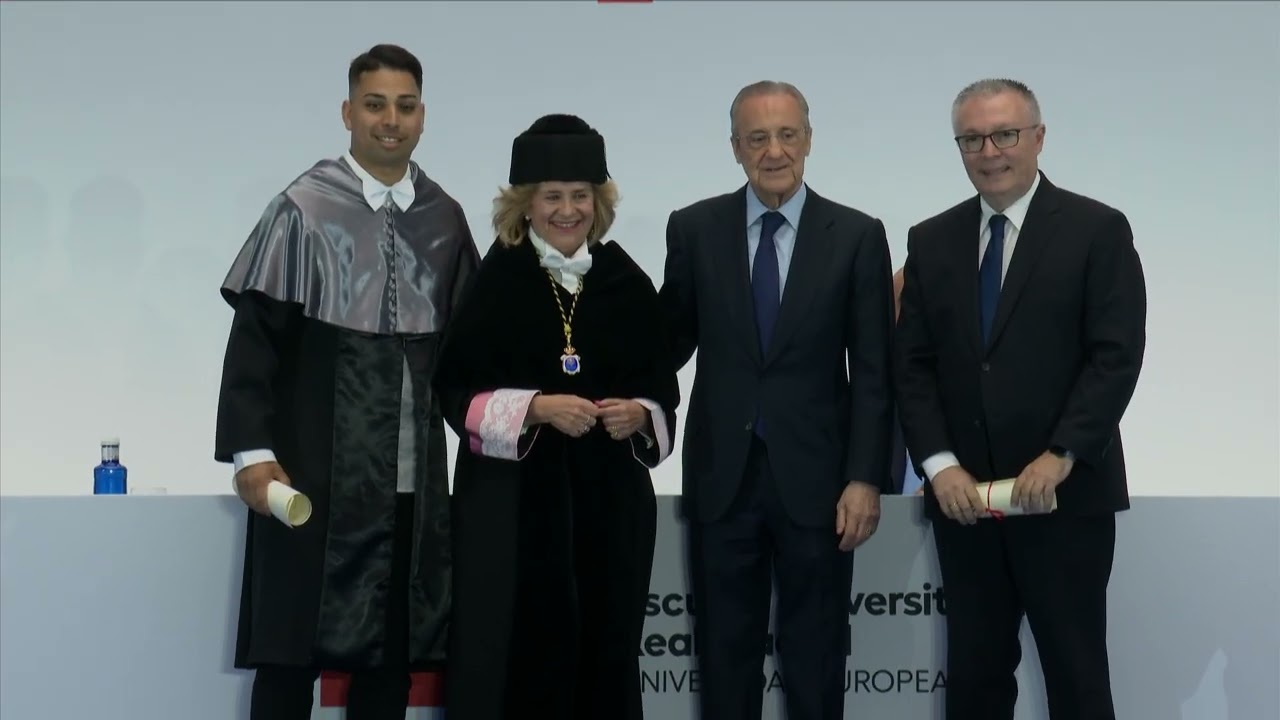

From the classroom to success: their stories
Daira Deicmane
Nutrition Educator
This program has provided me with the latest scientific information in sports and nutrition and taught me how to apply this knowledge to real-life situations. I am grateful for the amazing and knowledgeable professors and lecturers sharing their expertise with the students at the Escuela Universitaria Real Madrid. Furthermore, I am glad to say that because of this program, I have acquired new friends and people who I can ask for help. I hope to them my colleagues at some point in my career.

Denise Marek
Sports Nutritionist
I was particularly impressed with the methodology employed throughout the course. The flexibility of being able to attend live classes or watch them on demand was a game-changer for me. This approach allowed me to balance my studies with my other commitments without compromising the quality of my learning experience. Moreover, the Real Madrid experience added a unique dimension to the program. Being part of an institution with such a prestigious reputation in the world of sports provided a valuable context for the academic content.


AI for talent
AISports artificial intelligence in sports. During the master’s programme, you’ll have the opportunity to join the AISports initiative, taking part in workshops and training sessions with industry experts who will guide you in using cutting-edge tools.
Discover how artificial intelligence is transforming the world of sports health through real-world examples, test your knowledge, and earn your official AISports digital badge.
Study plan
The 100% online Master in Sports Nutrition comprises 10 modules, each with 6 ECTS. At the end of the programme, the student will receive the Private Master`s Degree in Sports Nutrition Online, granted by Universidad Europea de Madrid.
Study plan structure
Module 1. Nutrition for sports performance and body composition (6 ECTS)
- The basics of nutrition and nutrition for sports and physical performance.
- The basics of exercise physiology and nutrients metabolism during exercise.
- Energy requirements, planning and periodisation. Planification and periodisation of carbohydrate, proteins and fats intake.
- Micronutrients and antioxidants: functions, deficits, excess, and planification.
- Body composition analysis in athletes.
- Nutritional practices for changes in body composition in athletes.
- Training low-carb: science, protocols, objectives, and periodisation.
Module 2. Training and physical preparation of athletes (6 ECTS)
- The basics of sports training and training planification.
- The basics of physical preparation in athletes.
- Aerobic capacity training.
- Anaerobic capacity training.
- Training for muscle hypertrophy.
- Training for fat loss.
Module 3. Hydration, electrolytes, dehydration, heat conditions and adaptation (6 ECTS)
- The basics of hydration and electrolytes in the human body.
- Monitorisation and evaluation of hydration and electrolytes balance in different conditions.
- Hydration and electrolytes individual planning on athletes.
- Dehydration and dehydration adaptation.
- Heat conditions: physiology and hydration management.
Module 4. Nutritional supplements, functional foods and ergogenic aids (6 ECTS)
- Nutritional supplements in sports performance.
- Ergogenic Aids in sports performance.
- Nutritional supplements for fat mass loss.
- Nutritional supplements for muscle mass gain.
- Functional foods in sports performance.
Module 5. Nutrition for prevention and treatment of sports injuries (6 ECTS)
- The basics of sports injuries: bone mass, muscle tissue, soft tissues and others sports injuries.
- Body composition, energy demands and metabolism changes during sports injuries.
- Nutritional management and supplements for bone mass injuries.
- Nutritional management and supplements for muscle tissue injuries.
- Nutritional management and supplements for soft tissue injuries.
Module 6. Inflammation, sleep and chrono nutrition in sport performance & biomarkers interpretation in athletic population (6 ECTS)
- The basics of chronic and acute inflammation.
- Inflammation and sports practice.
- Chronobiology, chrononutrition, hormonal function and its relation with sleep and sports performance.
- Nutrition for sleep quality and its relationship with athletes recovery.
- Biomarkers: decision making, analysis, interpretation and use in health and performance of athletes.
Module 7. Digestive system, microbiota, gut training in sports performance (6 ECTS)
- The basics of the digestive system: anatomy, physiology and interaction with other systems.
- The digestive system and its relationship and integration with sports practice.
- Main digestive pathologies in athletes: causes, characteristics, medical and nutritional treatment.
- Microbiota and microbiome: what we know and how can we use it to improve health and performance in athletes.
- Gut training for improving sports performance.
Module 8. Nutrition for specific sports populations (6 ECTS)
- Nutrition in female athletes.
- Nutrition in young athletes.
- Nutrition & training in pregnant athletes.
- Nutrition in Diabetic type 1 athletes.
Module 9. Practical cases (6 ECTS)
- Solving real cases of athletes of all kinds.
- Experience with real cases and situations
Module 10. Final project (6 ECTS)
- Knowledge of scientific research
- Classification of the scientific quality of articles.
- Tools for creating a scientific article.
- Tools for creating a poster for dissemination and exhibition of the same.
Online exams and TFM
This master's degree is 100% online. You will be able to take the exams and the TFM virtually.
An intensive one-year programme to specialise in sports nutrition
1
First semester – Foundations of sports nutrition and athlete performance
In the first months, you will acquire a solid foundation in sports nutrition, exercise physiology, and hydration strategies, applying scientific principles to optimise health and performance.
- Master the basics of nutrition and metabolism during exercise, including energy requirements and macronutrient planning.
- Analyse body composition and learn nutritional practices for performance and physique optimisation.
- Explore hydration, electrolytes, and adaptation to heat conditions for athlete safety and efficiency.
2
Second semester – Advanced strategies and specialised applications
You will progress to advanced topics such as inflammation, sleep, digestive health, and nutrition for specific populations, applying your knowledge to real cases and research projects.
- Develop expertise in inflammation, chrono-nutrition, and biomarker interpretation for performance optimisation.
- Apply advanced strategies for digestive health, microbiota, and gut training to improve athletic outcomes.
- Solve real cases and complete a scientific research project to consolidate your professional skills.
More information
Competencies developed
- Know, interpret, and apply in practice different nutritional aspects that affect directly the practice of a sport or physical exercise, from the point of view of health and sports performance, as well as its close relationship with physiological, training and body composition aspects.
- Apply the principles of sports nutrition to plan the diet of an athlete according to their energy, nutrient and fluid requirements, with the aim of optimizing their health, sports performance, and body composition.
- Understand and analyse the main characteristics of the physical preparation and training of athletes both professionally and amateurly, to work in coordination with nutritional planning, body composition, and relevant health aspects.
- Understand the physiological mechanism of the main ergogenic aids, nutritional supplements, and functional foods, identifying cases where their use is necessary and detecting inadequate supplementation practices.
- Identify and know how to use the tools for assessing body composition in athletes, to carry out nutritional planning that allows obtaining necessary changes in the athlete, taking care of their health and performance.
- Manage and correctly plan the appropriate hydration practices for different athletes, considering the individuality of this concept, the effects of dehydration, the possible adaptation works and the handling of it in extreme heat conditions.
- Be able to perform relevant nutritional work to prevent or recover sports injuries through their different stages, knowing and differentiating the appropriate work according to the type of injury to be treated.
- Have an in-depth understanding of the concept and mechanisms of acute and chronic inflammation and its integration with the sports development of the subjects, as well as the appropriate handling from nutritional work.
- Understand and put into practice the concept of chronobiology, chrono nutrition and its relationship with sleep and recovery of the athlete, being able to integrate it into nutritional work.
- Know, make decisions, and correctly interpret the different biochemical parameters or Biomarkers that can be analysed in the athlete population to integrate them into the practice of interdisciplinary work.
- To lead projects and teams from an integral ethical and socially responsible approach, assessing the impact of their decisions on profits, the market, people and society.
- Master the keys to the major areas of world sport, in order to convert them into competitive advantages for the growth of the company within its sector.
- Apply and put into action everything they have learnt in one of the company's decision- making areas through professional internships.


Online methodology
Flexibility
Live virtual classes that will be recorded in case you cannot attend or want to see them again.
Support
You will have the support of our expert professors who will facilitate your learning, as well as an accompanying tutor who will guide you and help you achieve your goals.
Experiential Learning
Receive comprehensive training based on real-life cases combined with theoretical and practical learning.

Our educational model

Experiential Learning

Meaningful learning

Collaborative learning

Professional learning

Constructive and discovery learning

Autonomous learning

Individualised learning

Creative learning
Admissions
Recommended profile
- Graduates in Nutrition, Human Nutrition and Dietetics, Medicine or other careers related to the health area.
- Graduates in CAFYD, Physical Education or other careers related to the area of physical activity and sport.
Admissions requirements
For the access to the Master's Degree it is necessary to meet one of the following requirements:
- To be in possession of a University Degree.
- If applicable, accredit professional experience of at least 6 months that is directly related to the field of the degree.
- If applicable, accredit professional internships of CFGS that are directly related to the scope of the degree.
How to apply
The admission process to pursue an online undergraduate or postgraduate certificate at Universidad Europea can be carried out throughout the year, although enrolment on any of our programmes is subject to availability. In order to complete the process, follow these simple steps:
1
Documentation
You will need to send the specific documentation to your personal advisor
- Admissions form.
- Legal document required for accessing the programme
- Photocopy of your ID.
- Curriculum vitae.
2
Admissions test
Once your documentation has been reviewed, your personal advisor will contact you.
- Competency assessment test.
- Personal interview.
- Language assessment test (if applicable).
3
Reserving a place
Formalising the reservation of a place through our different methods of payment
- Direct debit.
- Credit card.
- Online payment.

Admissions application
Candidates shall not be charged, and their place shall not be guaranteed, until the reservation has been formalised. Get in touch with us!


Meet the faculty


You have seen of 11 results
Quality Guarantee
As part of its strategy, the University has an internal quality plan whose objective is to promote a culture of quality and continuous improvement, and which allows it to face future challenges with the maximum guarantee of success. In this way, it is committed to promoting the achievement of external recognitions and accreditations, both nationally and internationally; the measurement and analysis of results; simplification in management; and the relationship with the external regulator.