

Sports Management Master
Private degree issued by Universidad Europea de Madrid
Classes in English | Alcobendas | Start: October 2026 | Faculty of Medicine, Health and Sports | Escuela Universitaria Real Madrid Universidad Europea | 60 ECTS |
The Master's in Sports Management offers advanced training to help you build a successful career in the sports industry. This 9-month MBA programme, will equip you with the skills and knowledge needed to become a leader within the sports sector.
What will you learn during the programme?
- Strategic management of sports organisations.
- Leadership skills to lead teams and projects.
- Entrepreneurship and strategic planning applied to the sports sector.
- Marketing and communication focused on the sports industry.
- Management and operation of sports facilities, optimising their performance and profitability.
- Legal specialisation, gaining in-depth knowledge of the legal and regulatory aspects of sports.
Live the Real Madrid experience. During the programme, you will have the opportunity to choose an international trip, designed to explore the operations of leading sports institutions and gain unique insights into global sports management practices.
Discover our official Master's Degree in Spanish: Máster Universitario en Dirección de Entidades Deportivas MBA
The quality you deserve

QS Ranking
The Executive MBA in Sports Management has been recognised as the best executive MBA in sports and among the top 200 in the world by the prestigious QS Ranking 2025, standing out for its impact in employability and international profile.

Mundo Posgrado
The MBA has been recognised as the best sports master's programme in Spain, according to Mundo Posgrado 2025 ranking.

FSO
According to the FSO Ranking by Hamilton consultancy, the Master’s in Sports Management has been ranked among the top 10 online MBAs and as the best MBA specialised in the sports sector.

Shangai Ranking
Our faculty is ranked among the top 30 worldwide in the prestigious Academic Ranking of World Universities by the Shanghai Ranking 2025.

National Sports Award
Escuela Universitaria Real Madrid Universidad Europea was honoured with the 2018 National Sports Award, “Copa Stadium”, in recognition of its contribution to education, research, and the professionalisation of sports both nationally and internationally.

Discover Escuela Universitaria Real Madrid

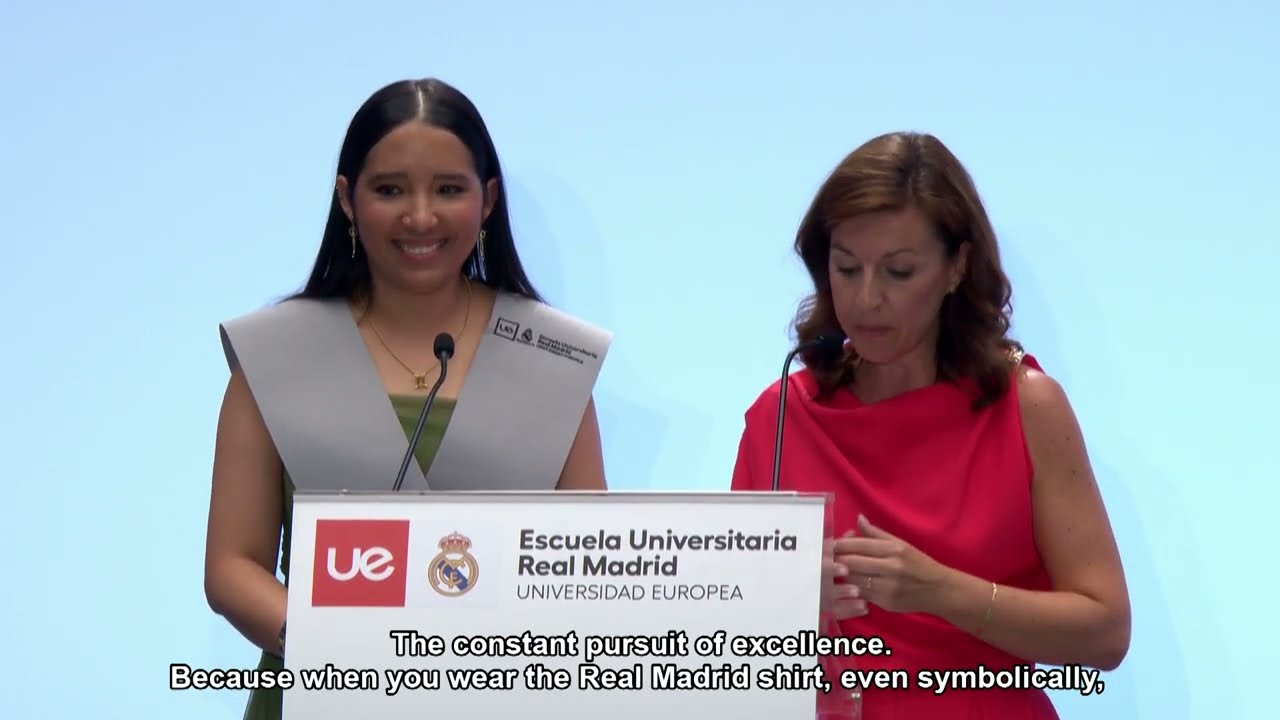
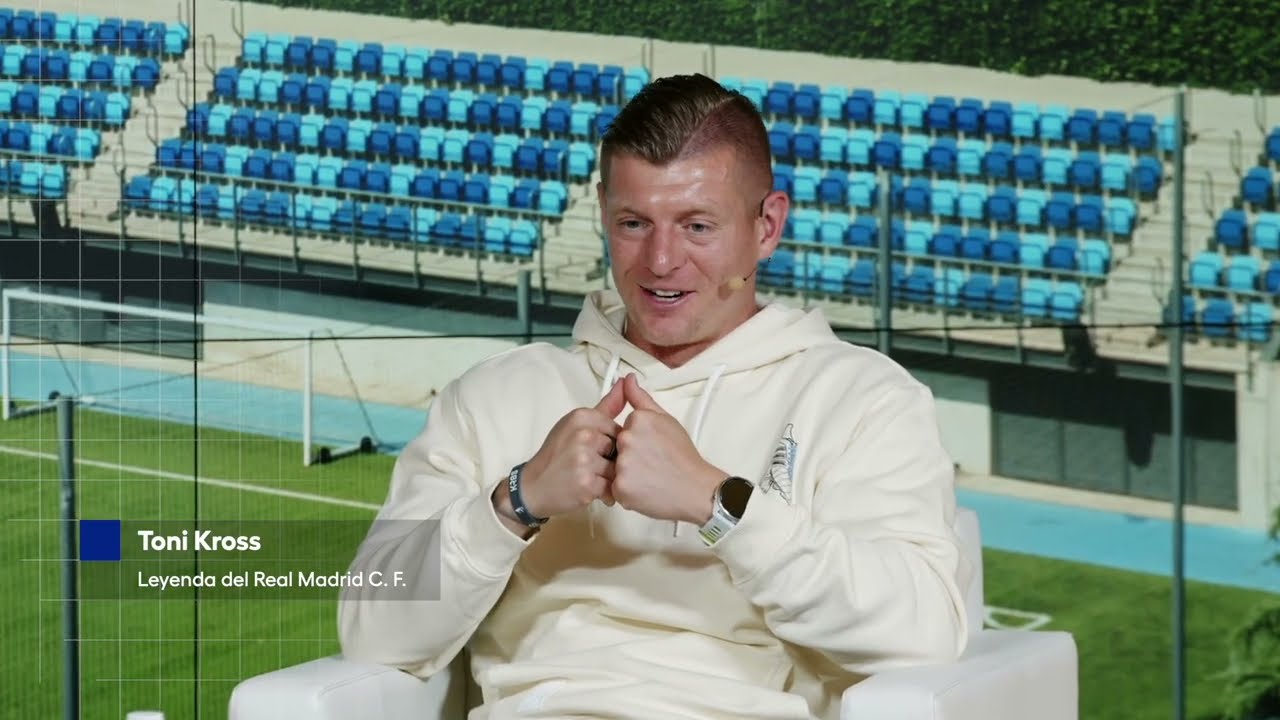
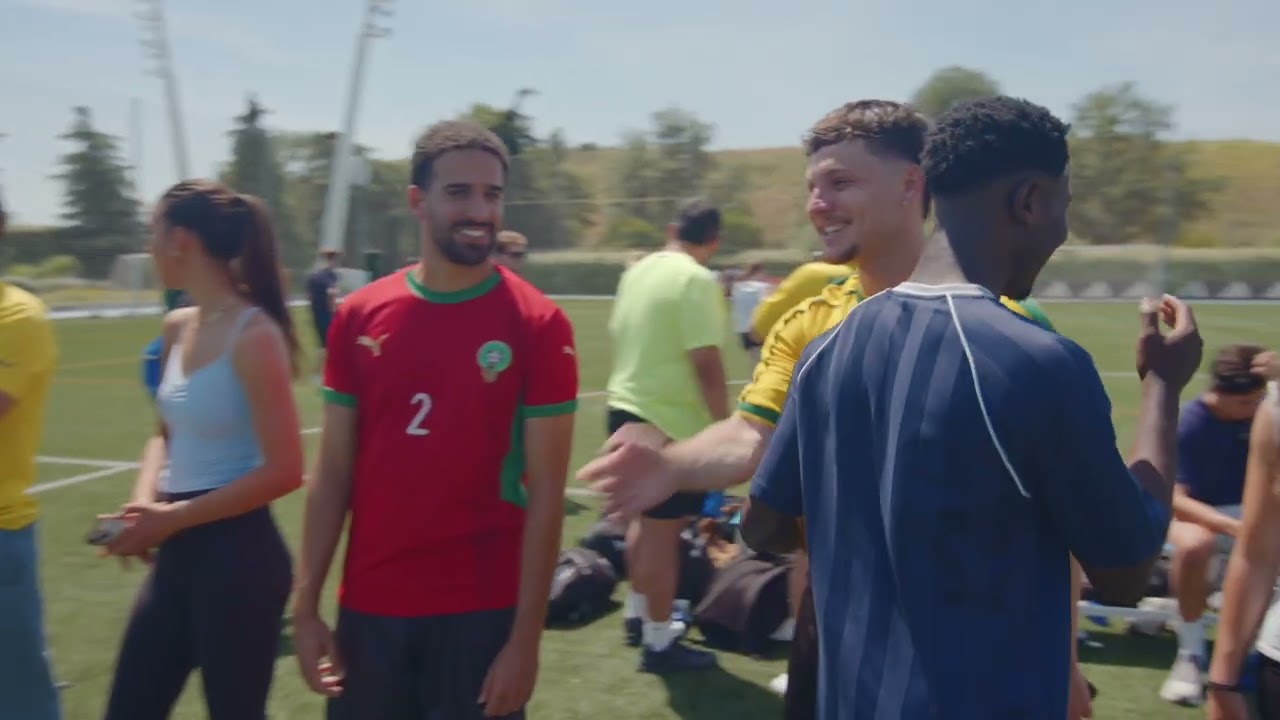
Immerse yourself in experiences that will shape your career

White Week
An event organized by the school with exclusive access for our students. A full week of unique sessions with leading professionals in the sports industry, professional athletes, and senior executives from Real Madrid C.F.

Exclusive visits
Throughout the program, you will take part in activities and educational visits to different sports events and facilities: to the Santiago Bernabeu Stadium, Vitoria, Huesca, the National Golf Center, Jarama Circuit, or WiZink Center, among others.

Real Madrid game
Experience the excitement of Real Madrid matches, including basketball games at the WiZink Center, youth academy matches, or women’s football games.
High-quality facilities
For you to make the most of our innovative academic model, Universidad Europea offers a range of advanced facilities equipped with the most innovative technologies.

Campus of Madrid (centro)
Santiago Bernabéu Stadium
Santiago Bernabeu Stadium, a Football History Monument

Campus of Madrid (centro)
Real Madrid City
The best Training Ground in the world
Their stories
Felipe Solleiro
Assitant to the Sport Direction at Red Bull Bragantino
The MBA allowed me to learn hand to hand with renowned sports industry professionals, and at the same time gave acess to unique opportunities at the most relevant sport entities.

Massimo Adalberto Benassi
Chief Business Development Officer at RC Deportivo A Coruña
An unforgettable year and an experience that helped me enormously in my professional career.

Alessandro Tozzi
Partnerships Activation Account at Juventus FC
The three most important values I will always carry with me because of the MBA experience are: teamwork, passion and friendships for life.

David Belenguer
Former LaLiga player - Real Betis B and Getafe C.F. President of C.D. Tondela at Liga Nos in Portugal.
This MBA, with its collaboration with Real Madrid, stands out thanks to its academic quality and highly experienced teaching staff.


AI for talent
AISports artificial intelligence in sports. During the master’s programme, you’ll have the opportunity to join the AISports initiative, taking part in workshops and training sessions with industry experts who will guide you in using cutting-edge tools.
Discover how artificial intelligence is transforming the world of sports health through real-world examples, test your knowledge, and earn your official AISports digital badge.
Study plan
Get all information about the MBA in Sports Management subjects
Study plan structure
Module I - General management in sports companies
- Economic analysis of the sports industry
- Strategic planning. Analysis of sports environments and competition
- Business management models and economic aspects
Module II - Economics and finance
- Financial statements of sports organisations
- Planning and control in sports organisation management
- Financial management
Module III - Sports facility management and operation
- Infrastructure management within a sports entity
- Production of sporting events
- Quality and incident management
Module IV - Marketing and communications
- Strategic and operational marketing
- Sponsorship in sports
- Audiovisual rights
- Sports and society
- Sports and the media
Module V - Managerial skills and human resources
- People management and teamwork
- Coaching applied to sports
- Motivational leadership of teams
- Communication: public speaking in professional environments
- Emotional intelligence in sports organisations
Module VI - Specialization branch A: entrepreneurship and sports for development *
- Strategies for starting a sports business
- The business plan and financing
- International organizations in sports for development
- Corporate social responsibility and sports
- Social entrepreneurship in sports
- Keys to success and failure
Module VII - Specialisation branch B: marketing and communications*
- The media
- Advertising agencies
- Official organisations
- Sports rights
- Sporting events and brand profitability
- Sports clubs
- Sponsorship
- Brand and identity management
- Practical application of a communication plan
- Social network and the community manager
- Sports content in the new digital world
Module VIII - Specialisation branch C: sports facility operation*
- Management of sports facility operations
- Security and technology at sports facilities
- Municipal operations and management
- The fitness and wellness market
- Large parks
- Golf course management
- Organisation of sporting events
- Management of leisure and non-conventional spaces
Module IX - Internship
Module X - Master’s thesis
What you will learn
1
First semester - Become a leader prepared to transform the sports industry
- Analyse the global sports industry, understanding the structure of clubs, federations, leagues, and leading organizations in an ever-evolving ecosystem.
- Develop strategic and financial management skills, learning to lead organisations with innovation, sustainability, and growth in mind.
- Master sports marketing and communication, creating powerful experiences that connect emotionally with fans and generate value for sponsors and stakeholders.
- Explore the latest trends and challenges, such as digital transformation, sustainability, and emerging technologies shaping the future of sports management.
2
Second semester - Turn knowledge into action with real-world and international experiences
- Manage strategic projects, making high-level decisions in complex and multicultural environments.
- Design global strategies for business development and sports marketing, using innovation and data to drive results.
- Take part in international learning experiences and masterclasses, including exclusive access to the Real Madrid ecosystem and trips to leading sports cities like London or New York.
- Complete professional internships with top organizations and showcase your leadership vision through a Final Master’s Project that consolidates your growth and expertise.
More information
Internships
Internships are a key component of your training. Acquiring experience after what you have learnt in your degree is the best way to enter the employment market. There are two types of internships: curricular—which are included in your study plan—and extracurricular—which you can do on a voluntary basis.
In order to complete your curricular internships, you need to have passed 50% of the programme credits and have enrolled in the subject before starting your internship. These internships are monitored by the company and the internship coordinator, and interim and final reports are prepared for evaluation.
If you want to take your work experience to the next level before finishing your university education, you can pursue an extracurricular internship. It’s possible to do internships in any academic year, but keep in mind that they are a complement to your studies; therefore, the more knowledge you acquire throughout your studies, the more you shall benefit from the internship.
Private masters’ degree methodology
The international character of this programme allows students and professionals in the sports industry to acquire a broad perspective of all existing models of sports management, even beyond the Spanish borders, thanks to the participation of top international professionals. This educational commitment exponentially strengthens the sphere of influence and the professional possibilities of our students.
This Sport Management MBA consists of ten business management modules, followed by an interdisciplinary module on management skills. The programme contains a specialised sports segment and focuses on the marketing, direction and management of sports facilities.
Students shall be familiarised with the places in the city where Real Madrid is present—facilities, sports venues, organisation and management institutions, etc.—as well as the Real Madrid Foundation. They shall also have first-hand experience with the other facilities and management models via visits to: Santiago Bernabéu Stadium, Ciudad Deportiva del Real Madrid—Real Madrid’s training facilities—Ciudad del Fútbol de la RFEF, Caja Mágica—Madrid Open’s tennis facilities—and other leisure and entertainment spaces ran by public and private entities.
Students shall have the chance to travel to New York with other students from Escuela Universitaria Real Madrid. This trip includes visits to major league organisations such as the NBA, MLS and NHL, major sports venues such as Metlife Stadium and marketing companies such as Octagon. This is one of the best experiences a student studying an Master in Sports Management in Madrid can have, from both a management and operational point of view, as this form of practical learning allows them to put learning into practice.
Key competencies on this programme
Basic competencies
- Possessing and understanding knowledge that provides a basis or opportunity to be original regarding the development and/or application of ideas, often in a research context.
- Students should know how to apply the knowledge acquired and their problem-solving skills in new or relatively little-known environments within wider (or multidisciplinary) contexts related to their area of study
- Students should be able to integrate knowledge and face the complexity of formulating opinions from information that may be incomplete or limited, but which includes thoughts on the social and ethical responsibilities linked to the application of their knowledge and opinions.
- Students should be able to communicate their conclusions, as well as the knowledge and underlying reasons they are based on, to expert and non-expert audiences in a clear and concise way.
- Students should possess the learning skills that enable them to continue studying in a way that will be self-directed or autonomous for the most part.
Cross-disciplinary competencies
- Responsibility: Students should be able to accept the consequences of actions and take responsibility for their own actions.
- Self-confidence: Students should be able to act with confidence and with sufficient motivation to achieve their objectives.
- Awareness of ethical values: Students' capacity to feel, judge, argue and act in accordance with moral values in a consistent, persistent and autonomous way.
- Communication skills: Students should be able to effectively express concepts and ideas, as well as possess clear and concise written communication skills and effective public speaking skills.
- Interpersonal understanding: The student should be able to actively listen for the purpose of reaching agreements using an assertive communication style.
- Flexibility: Students should be able to adapt and work in different and varied situations with different people. This involves assessing and understanding different positions, adapting their own approach as required by the situation.
- Teamwork: Students should be able to actively participate in achieving a common objective by listening, respecting and valuing the ideas and proposals of the other members of their team.
- Initiative: The student should be able to respond proactively to situations that emerge, proposing solutions or alternatives.
- Planning: Students should be able to effectively set their goals and priorities, defining the actions, time frames and optimum resources required to achieve these goals.
- Innovation-Creativity: Students should be able to come up with new and different solutions to problems that add value to problems posed.
Specific competencies
- Having an integrated vision of all of the dimensions of the company in the sports sector -external, internal and organisational-, as well as of the people and human capital that comprise it, to be able to analyse issues and to look for solutions in teams that help to achieve its strategic objectives. As such, students will partake in autonomous and collective learning, helping them to make decisions and to assess the corresponding economic and social impact.
- Controlling the key aspects of the most significant areas of the sporting world, transforming them into competitive advantages for the company's growth within its sector.
- Analysing the economic, legal and technological environment of a sector, as well as assessing and creating a medium- to long-term strategic plan, using current reference tools.
- Controlling the new business trends and practices of corporate social responsibility policies that affect the sports sector, while being able to establish an individual corporate social responsibility policy for each business.
- Taking on the skills of an executive: leadership, emotional intelligence, communication skills, team management, teamwork, planning, conflict resolution, negotiating and results-orientated skills, always with a responsible approach and a multicultural perspective, showing respect for diversity.
- Controlling the benchmark strategic concepts and tools regarding the organisational sizing of a company in the sports industry and being able to choose the best strategic alternative to apply in each market and company.
- Learning the tools used in managing the operations of a company and the benchmark business practices in the sports industry, which ensure the efficiency of activity and the fulfilment of set objectives.
- Designing the plans in the different areas (marketing, communication and sales, finance, production, human resources), using coordination criteria among them and aligning them with the company's general strategy.
- Controlling the key benchmark concepts regarding the sizing of new organisational structures and being capable of implementing plans that entail change and adaptation with criteria relating to resource optimisation and knowledge management.
- Applying and putting into action the knowledge acquired in one of the decision-making areas of the company by means of professional internships. Students may undertake internships through university agreements made with companies in the sports sector or industry, particularly in the area that most interests them in view of their future career development (management, marketing and communication, operations, finance), while also demonstrating their skills for successful integration into a business team.
Collaborating entities
In addition to the ongoing collaboration throughout the master's programme with various national and international football clubs, the following collaborating companies stand out:


Career opportunities with the Sports Management Master
Achieve a 100% employability rate
Through this master’s you shall learn through a practical methodology by working on real projects and being in direct contact with the sports industry. You will have the opportunity to specialise and advance your career in roles such as:
Director or manager of sports institutions
Work with clubs, fitness centers, federations, sports schools, and more.
Sports marketing manager
Design strategic campaigns for brands and sports organizations.
Communications manager
Oversee the image and reputation of sports entities.
Sports event organizer
Lead impactful competitions and activities.
Executive trainer
Prepare future leaders for the sports industry.
Athlete representative
Negotiate contracts and safeguard athletes' interests.
Manager in multinational sports companies
Operate within equipment, infrastructure, or sports sponsorship sectors.
Admissions
Start your future at Universidad Europea
You can become a student at Universidad Europea in three easy steps.
1
Admission exams
Start your admission process by calling +34 918257527 or request information and our advisors will contact you.
2
Place reservation
Once you have been admitted, secure your place by paying the reservation fee.
3
Enrollment
Submit the required documents to formalise your enrollment.
Scholarships and financial aid
We want to help you. If you want to study at Universidad Europea, you will have at your disposal a wide selection of own and official scholarships.
Credit recognition and transfers
You don’t have to stick with something you don’t like. That’s why we’ve designed specific plans for credit recognition and transfers.
Request your online credit recognition review, transfer your academic file and start studying at Universidad Europea.
Profile for prospective students and how to access this degree
Graduates who wish to focus their professional career on sports management, professionals from the sports industry who want to update their knowledge, professionals from other fields who would like to enter the world of sport or professional athletes who aspire to continue in the sector as managers, post athletic retirement.
Admissions requirements
For the application to the master, the student is required by law in accordance with the provisions of R.D. 861/2010:
- Be in possession of an official Spanish university degree or another issued by an institution of higher education belonging to another state that is part of the European Higher Education Area that authorizes access to master's degrees.
- Be in possession of a degree in accordance with educational systems outside the European Higher Education Area without the need for the homologation of their degrees, after verification by the university that they accredit a level of training equivalent to the corresponding official Spanish university degrees and that empower in the country issuing the degree for access to postgraduate education. Access by this means will not imply, in any case, the homologation of the previous degree that the interested party is in possession, nor its recognition for other purposes than that of taking the master's degree courses.
Meet the faculty
70% of the faculty on this programme have their doctorates.
Emilio Butragueño
General manager, Escuela Universitaria Real Madrid
Omar Elchichini
Programme director Private Master´s Degree in Sports Management.
Rodrigo Yagüez
Programme director Private Master´s Degree in Sports Management.
Cristóbal Godoy Anselmi
Programme director Private Master´s Degree in Sports Management.
Juan Carlos Fociños
Sports entities consultant, expert in new business development, generation and sponsorship activation. MBA in sports management & bachelor in economics
Juan Cantero
Sport business consultant with more than 11 years experience in different areas in the sports industry (clubs, events, education and management). Working daily for a better sports industry, more professional, and answering all challenges of the future.
Antonio Vos Saz
PhD in strategic management and human ressources, working as a lecturer and also cooperating with sports entities for the last 25 years.
Our faculty
- Pedro Corrales
Responsible for partnership creation. - Álvaro Vitores
Responsible for partnership activation. - Michael Sutherland
Chief transformation officer. - Chiara Trivella
Director global partnership creation. - Paula Serrano
Manager partnership creation. - Miguel García Caba
Sport legal advisor. - Ángel Sanz
General manager and founder, The Crow Legacy Company. - Javier Tola
Managing director Simply Sport. - Edouard Legendre
Strategic planning director, Geometry Global. - Scott Minto
Sports MBA director, San Diego State University. - Steve Gera
Chief executive Gains Group. Head Scout Hickory. - Nick Pye
Head of school of sport at University of Gibraltar. - Carlos Cantó
CEO of SPSG Consulting and board member of the Spanish Marketing Association. - Hugo Berenguer
Head of design Rafael de La Hoz Arquitectos. - Mikel Bárcena
Partner en Meta Final. - Antonio Fernández Arimany
Director general of International Triathlon Union. - Ramiro Lahera
President of the Madrid Triathlon Federation. Managing director and founder, Tactika Sports Culture. - Juan Carlos Fociños
Sponsorship manager at FBM Spanish Basket Federation of Madrid. - Fernando Pons Ortega
Partner responsible for Risk Advisory, Risk Management at Deloitte for the Tourism, Transport, Sport, Leisure and Gaming sectors. - Óscar Ugaz
Strategy director at Atomikal Marketing Digital. - Javier Bosh
CEO Nagi Smartpool Founder and CEO NBN23. - Gonzalo Corrales
Founder and managing director at AGM Sports. - Maikel Oettle
Vice president strategic partnerships, Euroleague Basketball, IMG Events. - Luke Sassano
Technical director, NY Cosmos. - Joseph Stetson
Vice president Mkt & Comm, NY Red Bulls. - Amy Scheer
Chief commercial Officer, NY Red Bulls. - Marco Matute
Event marketing coordinator, NY Red Bulls. - Dan Donigan
Head coach Men’s Soccer, Rutgers University. - Michael Minchella
Manager Ticket Sales, New York City F.C. - Adan Catovic
Account executive, New York City F.C. - Brendan Long
Director of new business, MSG. - Cara Chernow
Manager Ticketing & Sales, MSG. - Nicole Rosamilia
Coordinator special events, Metlife Stadium. - Geoffrey Pope
Ex-football player, New York Giants. - Brian Friedman
Chief financial officer New York Jets. - George Moreira
Manager professional tournaments, Us Open & Us Open Series. - Chris Clunie
Director international operations, NBA. - Troy Justice
Basketball operations international, NBA. - Emilio García Duarte
Marketing Latin America, NBA. - Jose Luis Los Arcos
Director sports partner solutions, Univision. - Alfonso Mondelo
Technical director competitions, MLS - Joseph Tacopina
President, Venezia F.C. - Nicole Allison
Director partnership marketing, NHL - Maikel Oettle
Vice president strategic partnerships, Euroleague Basketball, IMG Events. - Daniel Hurst
Attractions manager Climb To The O2. - Martin Guntrip
Club director Wimbledon. - Dan Bloxham
Tennis head coach & facility tour guide Wimbledon. - Sam Reid
Marketing & Sponsorship Mindshare. - Jason Hughes
Responsible for football business IMG. - Jayne Linaker
Tour operations manager Twickenham Tracy Match Day Manager Twickenham. - Chris Townsend
Commercial director Chelsea FC. - Marco Matute
Event marketing coordinator NY Red Bulls. - Dan Donigan
Head coach men’s soccer Rutgers University. - Michael Minchella
Manager ticket sales New York City FC. - Adan Catovic
Account executive New York City FC Brendan Long. Director Of New
Business MSG. - Nicole Rosamilia
Coordinator special events Metlife Stadium. - George Moreira
Manager professional tournaments Us Open & Us Open Series. - Chris Clunie
Director international operations NBA. - Troy Justice
Basketball operations international NBA. - Emilio García Duarte
Marketing Latin America NBA. - Adolfo Bara
General manager marketing & sales La Liga. - José Luis Los Arcos
Director sports partner Solutions Univisio. - Alfonso Mondelo
Technical director competitions MLS. - Alberto Talavera
Director at ‘Asociación Española de Gerentes de Golf’. - Oscar Sanchez
Sport management consultant. - Alfonso Roberes
Founder and CEO at Arowana Sports. - Pablo Vega
VP at Federación Madrileña de Triatlón. - José Bonal Sanchez
Sports management professor. - Juan Cantero
Founder and managing director at Meta Final. - Ornella Bellia
Head of professional football at FIFA. - Héctor Peris
CEO at Leaderbrock Sports. - Nuno Alves
Director at Wink. - Javier Sánchez
Managing partner at Beside Ventures, presidente MAD Rugby. Professor at UC3M and CUNEF. - Carles Poyato
Managing partner at Club Natació Sabadell. Professor at UAB. - Nuria Moreno Peinado
Communication expert. - Dr. Antonio Vos Saz
Financial director at Club de Campo Villa de Madrid S.A. - Hugo Taracido
CEO All American Education.
Frequently asked questions
How does the MBA in Sports Management prepare you to lead sports organisations?
The MBA in Sports Management helps you understand how clubs, federations, leagues and sports companies work. You develop skills in strategy, finance, leadership, operations and business development for the global sports industry.
Will you learn how sports clubs are managed in the Master in Sports Management?
MBA in Sports Management focuses on the strategic management of sports clubs and organisations. You analyse areas such as planning, decision-making, facilities, communication, revenue generation and stakeholder management.
Can you specialise during the MBA in Sports Management?
Yes, the MBA in Sports Management includes specialisation branches linked to the sports business. You can focus on areas such as entrepreneurship and sport for development, marketing and communications, or sports facility operations.
How practical is the MBA in Sports Management?
MBA in Sports Management combines business knowledge with real sports industry experiences. You take part in masterclasses, educational visits and practical projects, and you complete a Final Master’s Project linked to sports management challenges.
Does the MBA in Sports Management include internships in the sports industry?
The Master in Sports Management includes curricular internships and also allows extracurricular internships. Previous internship partners include Real Madrid C.F., Adidas, Decathlon and Garrigues, among other sports and business organisations.
What is the Real Madrid connection in the Master in Sports Management?
MBA in Sports Management connects you with the Real Madrid C.F. ecosystem through faculty, visits and exclusive activities. You can attend White Week, visit places such as Santiago Bernabéu Stadium, Real Madrid City, Madrid Arena or Jarama Circuit, and learn from professionals linked to elite sport.