
What is architectural design?
Edited on Aug. 11, 2026
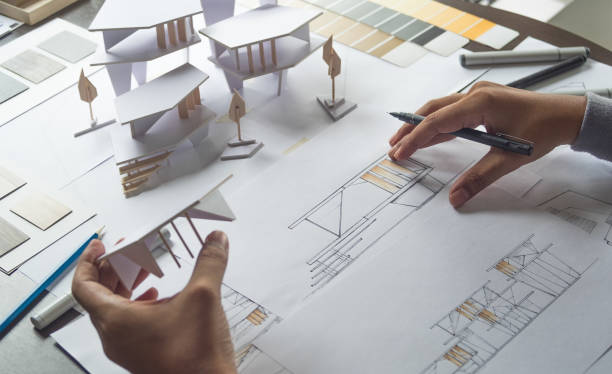
Architectural design is the process of planning, conceptualising and shaping buildings and spaces to respond to functional, aesthetic and technical demands. In practical terms, it determines how environments are built, experienced and used in everyday life.
This discipline spans from early concept sketches to construction-ready documentation. It requires analysing site conditions, interpreting building regulations and developing solutions grounded in real human needs, such as how people move through a space, how light enters a room and how a building ages over time.
For those looking to build expertise in this field, the Degree in Architecture at Universidad Europea covers BIM methodology, drawing, projects and urbanism. It is the first architecture bachelor's in Europe to achieve both NAAB certification and RIBA validation, meaning graduates can practise professionally in the USA and UK.
Those looking to specialise further can pursue the Master in Architecture, which incorporates parametric design, energy simulation and robotics-assisted prototyping. For a sustainability focus, the Online Master's in Sustainable Architecture covers passive design, renewable energy integration and green building standards, including BREEAM Associate and LEED Core Level certification.
What are the different types of architectural design?
Architectural design splits into several specialisations, each responding to different scales, uses and environments. Understanding these distinctions is useful whether you're exploring the field for the first time or deciding which direction to take your career.
Residential
This covers housing at every scale, from single-family homes to large apartment complexes. The focus is on creating spaces that are comfortable, efficient and adapted to how people actually live, with natural light, acoustic separation, storage and circulation flow.
Commercial
Commercial projects include offices, retail spaces, hotels and restaurants. Here, design decisions are driven by user experience and operational logic, such as how customers move through the space and how the environment reinforces a brand or business function.
Urban
This operates at the scale of cities and districts. It coordinates infrastructure, public space and mobility systems to make neighbourhoods function as coherent, accessible environments, not just collections of individual buildings.
Landscape architectural design
Landscape architecture focuses on outdoor spaces, including parks, waterfronts, squares and green corridors. It works with natural systems like topography, vegetation and water to shape them into functional public environments.
Sustainable
This integrates energy efficiency, responsible material selection and climate adaptation into a project. This includes passive strategies like orientation and ventilation, as well as active systems such as solar energy and rainwater harvesting.
What is the difference between architecture and architectural design?
Architecture is the broader discipline, whereas architectural design is a specific stage within it where concepts take shape and spatial solutions are developed. Architecture encompasses the full lifecycle of a project from the initial brief through technical coordination, regulatory compliance, construction oversight and final delivery.
Architectural design sits within that process but has a specific focus. It is the conceptual and creative stage, where a site analysis becomes a floor plan, or where constraints become design decisions. What happens at this stage determines the logic of everything built after it.
The boundary between the two is fluid. Working architects move constantly between design thinking and technical execution, and the strongest projects are those where neither is treated as secondary to the other.
What skills are needed to work in architectural design?
Architectural design requires creative thinking, technical knowledge and interpersonal skills. Professionals who thrive in this field are those who can move fluidly between a concept sketch and a construction detail while communicating clearly at every stage.
Spatial thinking and creative vision
At the core of architectural design is the ability to visualise three-dimensional space and understand how people experience it. This means working with proportion, light, circulation and scale to anticipate how a finished space will feel and function.
Technical and construction knowledge
Ideas only become buildings when they are structurally sound, materially viable and code-compliant. A working knowledge of construction systems, structural logic and building regulations is non-negotiable.
Digital tools and emerging technologies
BIM, CAD, parametric design and energy simulation are now standard in professional practice. Fluency in these tools determines the speed, precision and ambition of what you can deliver on a real-world project.
Sustainability literacy
Architectural design is increasingly shaped by energy performance targets, material efficiency and environmental regulation, particularly across Europe. Understanding passive design strategies, renewable energy integration and green building certifications is a core professional competency.
Problem-solving ability
Budget limits, site conditions, planning restrictions and client requirements rarely align neatly. Architectural designers have to find solutions that satisfy all of them, which means developing strong analytical thinking alongside creative instinct.
Communication and collaboration
Architecture is a team discipline. Designers work alongside structural engineers, MEP consultants, quantity surveyors and construction managers, as well as clients who may have no technical background. The ability to translate complex design decisions into clear, accessible language is as important as the decisions themselves.
Why is architectural design important?
Architectural design shapes the environments where people spend most of their lives: homes, workplaces, hospitals, schools and public spaces. That makes it one of the most consequential disciplines there is, with an impact that is simultaneously practical, economic and cultural.
It directly affects quality of life
A well-designed building is easier to navigate, well-lit and physically accessible. Thoughtful spatial layout reduces stress, supports productivity and improves the daily experience.
It determines long-term efficiency
Design decisions made at the concept stage have decades of consequences. A building that optimises natural light reduces energy costs. A floor plan that anticipates how a space will be used avoids expensive modifications later. Good architectural design is an economic investment.
It is central to the sustainability challenge
Buildings account for approximately 40% of energy consumption in the EU. How they are designed, their orientation, insulation and materials determine how much of that energy is wasted.
It carries cultural weight
Architecture reflects the values, history and identity of the societies that produce it. The buildings of a city tell you something about its priorities, its ambitions and its relationship with the past.
Architectural design is a discipline that combines creativity, technical knowledge and human-centred thinking. For those willing to develop all three, it opens doors across residential, commercial, urban and sustainable practice.
Whether you are taking your first steps in the field or looking to deepen an existing foundation, the work of an architectural designer shapes the world in ways that are immediate and lasting.
FAQs
What is the main goal of architectural design?
To create spaces that are functional, safe and coherent, responding to the people who use them, the environment they sit within and the brief they were built to answer.
What is an example of architectural design?
The redesign of Madrid Río, which transformed a motorway corridor into 10 kilometres of public parkland, is a strong example of architectural and urban design working together at a city scale.
Is interior design part of architectural design?
Yes, architectural design establishes the structure, envelope and primary layout of a building, while interior design focuses on the specific finishes, furniture and atmosphere within that framework.
What career options are related to architectural design?
Graduates can work as architectural designers, project architects, urban planners, landscape architects, sustainability consultants or BIM coordinators. Many also move into heritage conservation, set design or architectural visualisation.
Article published on April 29, 2026