
Digital twins in healthcare
Oct. 28, 2026
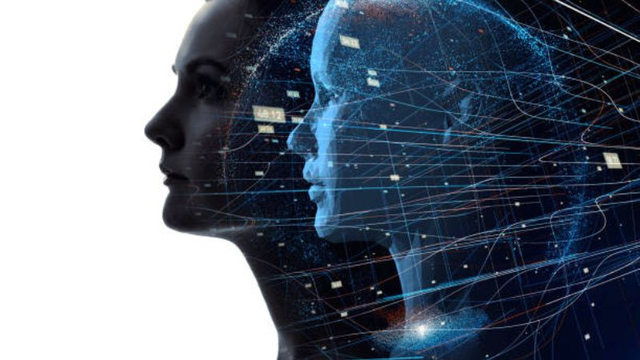
Digital twins in healthcare are virtual models of patients, organs, medical devices or healthcare systems that use real-world data to represent and analyse their physical counterparts. By combining biomedical data with computational modelling, they allow researchers and healthcare professionals to simulate scenarios, study changes and assess potential interventions.
For example, a digital twin can represent a patient's heart using information such as medical imaging and physiological measurements. Researchers can then use the model to investigate how the heart may respond to different conditions or treatments.
This technology brings together biomedicine, engineering, data science and artificial intelligence, making it an increasingly relevant area for professionals working at the crossroads of healthcare and technology. A Degree in Biomedicine provides relevant foundations through subjects including bioinformatics, biostatistics and big data and artificial intelligence in biomedical sciences.
How do digital twins work in healthcare?
A healthcare digital twin connects a physical system with a computational model that can be updated using new data. The physical system might be an individual patient, an organ, a medical device or an entire hospital process.
The process generally involves four key elements:
- Data collection from sources such as medical imaging, electronic health records, laboratory tests, genomic information and wearable sensors.
- Computational modelling to create a virtual representation of the biological or healthcare system.
- Data integration to update the model as new information becomes available.
- Simulation and analysis to examine possible outcomes and compare different scenarios.
The complexity of the model depends on its purpose. A digital twin of a heart requires detailed information about anatomy and physiology, while a hospital digital twin may focus on patient flow, bed capacity and the use of medical resources.
Unlike a conventional simulation, a digital twin is intended to remain connected to a specific physical counterpart through data. However, not every healthcare model described as a digital twin has this level of connectivity or personalisation.
What are digital twins used for in healthcare?
Digital twins have applications across clinical research, treatment planning, medical technology and healthcare management.
Personalised treatment and disease research
Patient-specific models can help researchers investigate how an individual may respond to different interventions. This is particularly relevant to precision medicine, where factors such as anatomy, physiology and genetics influence treatment response.
In cancer research, for example, computational models can be used to study tumour characteristics and investigate potential treatment responses.
Surgical planning
Digital representations of a patient's anatomy can support surgical planning by allowing clinicians to examine structures and simulate aspects of a procedure in a virtual environment.
Three-dimensional anatomical modelling is particularly useful when a procedure involves complex or highly individualised anatomy. The model provides additional information for clinical planning rather than replacing professional judgement.
Drug and medical device development
Digital twins can also be used in biomedical research to investigate how drugs, implants and medical devices behave under different conditions.
Virtual testing allows researchers and engineers to alter parameters and examine potential outcomes before conducting physical experiments. This makes computational modelling relevant to areas such as medical device engineering and pharmaceutical research.
Professionals working in this area need knowledge that spans healthcare and technology. A biomedical engineer can, for example, work across medical devices, diagnostic technologies and engineering solutions for healthcare.
Hospital management
Digital twins do not have to represent an individual patient. They can also model healthcare processes, such as patient journeys through a hospital.
A hospital could use a virtual model to simulate changes to patient flows, staffing or resource allocation and examine their effects on factors such as waiting times and capacity.
What are the benefits of digital twins in healthcare?
The main benefit of digital twins is that they provide a controlled environment for analysing complex biological and healthcare systems.
A patient-specific model can bring together information from different sources, creating a more detailed representation than analysing individual datasets separately. Digital twins can also allow researchers to compare scenarios without immediately changing the real-world system.
Another important feature is the ability to represent uncertainty. Healthcare outcomes are rarely completely predictable, so models can incorporate probabilities and ranges rather than treating every variable as fixed. This is where approaches such as probabilistic engineering become relevant, particularly when models need to account for uncertainty in inputs or predicted outcomes.
However, the usefulness of a digital twin depends on the quality of its data and the accuracy of its underlying model. Validation, interoperability, data governance and clinical evaluation are essential before a model can reliably support healthcare decisions.
How are digital twins changing biomedical research?
Digital twins are changing biomedical research by providing a way to connect biological knowledge with computational analysis.
Developing these systems requires professionals who understand both the physical processes being modelled and the technologies used to represent them. Biology and medicine provide the underlying knowledge, while statistics, programming, engineering and artificial intelligence provide the tools for analysing and modelling complex systems.
This multidisciplinary approach is particularly relevant as healthcare generates increasingly large and varied datasets. The challenge is not simply to create increasingly sophisticated virtual models, but to ensure that they accurately represent real biological systems and produce information that is useful in research or clinical practice.
Digital twins therefore sit at an important intersection between healthcare and technology. Their applications already span patient modelling, surgical planning, drug research, medical devices and hospital operations, while ongoing research focuses on improving their accuracy, connectivity and clinical validation.
FAQs
Can a digital twin predict a patient's future health?
A digital twin can use computational and predictive models to estimate possible outcomes, but its predictions depend on the quality of the available data and the model itself. It should therefore be treated as a decision-support tool rather than a definitive prediction.
What data can be included in a healthcare digital twin?
Depending on its purpose, a digital twin can incorporate medical images, electronic health records, laboratory results, physiological measurements, genomic data and information from sensors or wearable devices.
Are digital twins used outside healthcare?
Yes. Digital twins are also used to model systems in areas including manufacturing, engineering, energy and transport. The underlying principle is the same: creating a data-connected virtual representation of a physical system.