
Why study renewable energy? Career opportunities and future trends
Edited on March 25, 2026
The world's energy system is being rebuilt from the ground up. Governments, energy companies and industrial giants are pouring investment into solar farms, offshore wind, green hydrogen and smart grids. For engineers, scientists and sustainability professionals, that shift is creating one of the most dynamic job markets in decades.
For graduates and working professionals ready to move into this space, the Online Master's in Renewable Energies at Universidad Europea covers renewable power generation, project management and emerging technologies, including green hydrogen and climate change adaptation, designed for professionals ready to lead the transition.
What is renewable energy?
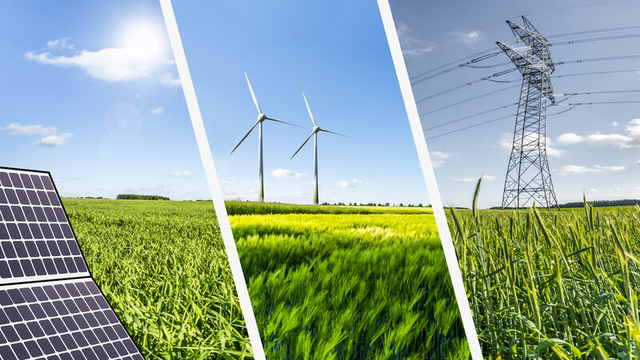
Renewable energy comes from naturally replenishing sources, from sunlight and wind to biomass and geothermal heat. Unlike fossil fuels, these resources do not run out and produce significantly lower greenhouse gas emissions across their lifecycle.
The main types include:
- Solar energy generated through photovoltaic panels and thermal systems
- Wind energy produced by onshore and offshore turbines
- Hydroelectric power derived from the flow and pressure of water
- Biomass and biofuels sourced from organic matter such as crops and agricultural waste
- Geothermal energy captured from heat stored beneath the Earth’s surface
- Marine energy harnessed through tidal movement and ocean waves
Across Europe, these technologies are no longer alternative options; they are the backbone of new electricity infrastructure, industrial decarbonisation strategies and the transition away from fossil fuel dependency in transport.
Why is renewable energy important for the future?
Reducing dependence on fossil fuels and cutting carbon emissions are the most immediate drivers, but the importance of renewable energy goes further. It strengthens energy security by reducing exposure to volatile fuel prices and gives countries greater control over their own supply.
Renewable systems are now integral to electric transport, green hydrogen production, sustainable manufacturing, smart grid development and net-zero building design.
According to the International Energy Agency, global renewable electricity capacity is expanding faster than at any point in history. The professionals driving that expansion are engineers, project managers, energy analysts, policy specialists and systems designers working across every stage of the energy chain.
Why study renewable energy?
Renewable energy is a sector built on specialised technical knowledge, and demand for that knowledge is growing faster than the general workforce can supply it. According to the International Renewable Energy Agency, the sector employs over 16 million people globally.
Most professionals entering the field come from engineering, construction, environmental sciences or industrial operations. A postgraduate specialisation converts that general technical foundation into the specific expertise employers in this sector are looking for, from energy markets and grid integration to project finance and climate regulation.
A solid master's programme in this field typically covers:
- Solar photovoltaic systems and thermal applications
- Wind farm operations, onshore and offshore
- Energy storage technologies and grid integration
- Environmental impact assessment and climate policy
- Hydrogen technologies and green fuel systems
- Energy efficiency and sustainable infrastructure
At Universidad Europea, students complete hands-on projects with companies including Acciona, Iberdrola, Naturgy and Endesa, and graduate with two TÜV Rheinland certifications in Wind Farm Management and Solar Farm Management.
Career opportunities in renewable energy
Renewable energy creates opportunities across a range of technical and strategic disciplines, and the roles reflect how complex and interconnected modern energy systems have become.
Design and engineering Renewable energy engineers and solar project managers work on the technical design and delivery of generation systems, from rooftop photovoltaic installations to utility-scale solar farms.
Operations and infrastructure Wind farm managers and grid integration specialists keep energy systems running, overseeing turbine maintenance, managing performance data and ensuring renewable sources connect reliably to electricity networks.
Consultancy and strategy Energy consultants and sustainability managers work with companies and public bodies to improve efficiency, reduce emissions and build long-term decarbonisation strategies.
Emerging technologies Hydrogen project analysts are among the fastest-growing roles in the sector, supporting the development of green hydrogen infrastructure as it moves from pilot projects to industrial scale.
Employers span utilities, engineering consultancies, infrastructure developers and public institutions. Many roles involve cross-border collaboration, particularly across European energy transition programmes and EU-funded climate initiatives.
Skills and career prospects in renewable energy
A career in renewable energy draws on technical engineering knowledge, data analysis, regulatory awareness and project management, often within the same role. Professionals need to understand energy systems and infrastructure, but also how to navigate permitting processes, interpret performance data and coordinate complex, multi-stakeholder projects.
These are skills with lasting value. Renewable energy expertise is relevant across Europe and internationally, and the sector aligns with long-term public and private investment in a way that declining fossil fuel industries simply do not. For many professionals, it also offers the chance to work on infrastructure that has a direct, measurable impact on emissions and energy access.
Study renewable energy in Europe in English
Europe is at the centre of the global energy transition, leading in offshore wind capacity, solar infrastructure and green hydrogen development. Studying here in English gives international professionals access to that ecosystem directly, with programmes built around the technologies and challenges energy companies are dealing with today.
For those drawn to the broader engineering landscape, Universidad Europea's Engineering Master's Degrees cover a range of technical disciplines across the same industry-connected framework.
Renewable energy is no longer a niche specialism. It is core infrastructure, and the professionals who understand it are in demand across Europe and beyond.
FAQs
Is green hydrogen really the future of energy?
Green hydrogen is one of the most invested areas in the current energy transition. Under its REPowerEU plan, the European Union has set a target to produce 10 million tonnes of renewable hydrogen domestically and import a further 10 million tonnes by 2030.
What does energy storage have to do with renewable energy?
Renewable sources like solar and wind are intermittent as they generate power when the sun shines or the wind blows, not necessarily when demand peaks. Energy storage systems store surplus energy and release it when needed.
Do you need an engineering background to study renewable energy?
Not always. Many programmes accept graduates from environmental sciences, physics, industrial technology and related technical fields, although engineering knowledge is often beneficial.
Article published on Feb. 11, 2022