
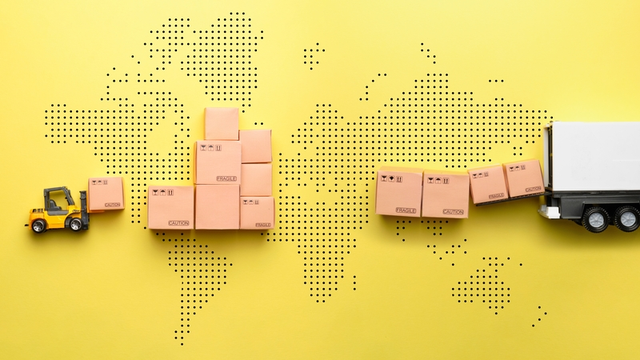
Reshoring is the process of bringing manufacturing or other production activities back to the company’s home country after they have previously been moved overseas. It represents a shift in how businesses approach global supply chains, with resilience, supply security and proximity to customers becoming increasingly important alongside cost.
For business professionals, understanding reshoring means looking beyond where products are made. The decision involves supply chain management, international trade, investment, labour costs and geopolitical risk. These are also areas explored through the Degree in Business Administration, where students develop knowledge across areas such as finance, marketing and general management.
Why does reshoring happen?
Reshoring happens when the benefits of producing overseas no longer outweigh the costs and risks associated with a geographically dispersed supply chain. Several factors can influence this decision.
Rising production costs are one consideration. Wage growth in emerging economies can reduce the labour cost advantage that originally encouraged companies to offshore manufacturing. However, businesses increasingly assess total cost of production, which also includes energy, transport, inventory, tariffs and disruption risks.
Supply chain disruption is another major factor. Long and highly fragmented supply chains can expose businesses to shipping delays, shortages and sudden increases in logistics costs. Shortening the distance between production and the end market can improve predictability and give businesses greater control over critical stages of manufacturing.
Automation and advanced manufacturing have also changed the economics of reshoring. Robotics and other production technologies can reduce reliance on low-cost manual labour, making domestic manufacturing more competitive in sectors where precision and productivity are important.
Geopolitical considerations are equally significant. Trade tensions, tariffs, export restrictions and government incentives can all affect where companies manufacture products. For strategically important goods such as semiconductors, medicines and batteries, governments and businesses also have an interest in reducing excessive dependence on overseas suppliers.
What are the advantages and challenges of reshoring?
The main advantage of reshoring is greater control over production and supply chain risk, although bringing manufacturing home also involves high costs.
Shorter supply chains can make delivery times more predictable and reduce exposure to international freight disruption. Domestic production can also make it easier to monitor quality control, regulatory compliance and production standards.
Reshoring can strengthen domestic manufacturing by creating demand for factories, suppliers and skilled workers. Its effect on employment is not automatic, however, because highly automated facilities can produce significant output with relatively small workforces.
There can also be environmental benefits when reshoring reduces the distance goods travel. The overall environmental impact still depends on factors such as energy sources, production efficiency, raw materials and the location of suppliers.
The biggest challenge is cost. Labour, energy, property and regulatory compliance can be more expensive in developed economies. Businesses therefore need sufficient productivity and automation to make domestic production commercially viable.
Reshoring also requires substantial upfront investment in facilities, machinery and supplier networks. It does not remove international dependencies either. A factory may be located domestically while still relying on imported components, minerals or specialist equipment.
Which industries are most likely to reshore?
Reshoring is particularly relevant to industries where supply security, technological capability and speed to market are strategically important.
Manufacturing is a major example, including automotive, electronics, machinery and advanced components. Battery production has also become strategically important as economies invest in electric vehicles and energy storage.
The pharmaceutical and medical technology sectors have strong incentives to secure reliable supplies of medicines and critical equipment. Semiconductor manufacturing is another important area because chips are essential to industries ranging from telecommunications to automotive production.
Fashion and textiles can also benefit from closer production when businesses prioritise shorter lead times, smaller production runs and rapid responses to consumer demand.
Reshoring vs. nearshoring vs. offshoring
Reshoring, nearshoring and offshoring describe different approaches to locating production.
- Reshoring brings production back to the company’s home country.
- Nearshoring moves production to a geographically closer country, often to balance lower costs with shorter supply chains.
- Offshoring moves production to a more distant overseas location, traditionally to access lower production costs.
The right strategy depends on the company’s priorities. A business may choose different approaches for different products or components rather than relying on a single manufacturing model.
How does reshoring affect the global economy?
Reshoring is changing global supply chains without eliminating international trade. Instead, businesses are increasingly combining domestic production with international suppliers and regional manufacturing networks.
This can strengthen industrial capacity in developed economies while reducing dependence on certain countries for strategically important products. It can also increase demand for skilled manufacturing workers and investment in production infrastructure.
At the same time, countries that have relied heavily on foreign manufacturing investment can face weaker demand if companies relocate production. The wider effect is therefore a reorganisation of global value chains rather than a simple reversal of globalisation.
For businesses operating across borders, this makes international strategy more complex. Decisions about international business expansion increasingly need to account for supply chain resilience, geopolitical exposure and the location of strategic resources alongside traditional measures such as labour and transport costs.
Is reshoring a long-term structural change?
Reshoring forms part of a broader shift towards more flexible and diversified supply chains. Rather than completely abandoning overseas production, many businesses are adopting hybrid strategies that combine reshoring, nearshoring and offshoring.
The central change is therefore not simply where production takes place. It is how companies define efficiency and resilience. A supply chain with the lowest possible production cost is not necessarily the most competitive if a disruption can stop production or delay deliveries.
For business leaders, the challenge is to balance cost, capacity, market access, geopolitical risk and operational control. Reshoring is one response to that challenge and an important concept for understanding how global manufacturing is evolving.
FAQs
Does reshoring mean all production returns home?
No. Companies often reshore only specific products, components or stages of production that are considered strategically important.
Is reshoring the same as bringing jobs back?
Not necessarily. Modern reshoring facilities often use automation and advanced manufacturing, meaning production can increase without a proportional increase in employment.
Does reshoring eliminate supply chain risk?
Domestic manufacturing can reduce exposure to international transport and geopolitical risks, but companies can still depend on imported raw materials, components and specialist equipment.
How do companies decide whether reshoring is financially viable?
Businesses compare the total cost of production across locations. This includes labour, energy, transport, tariffs, inventory, infrastructure, quality control and the potential cost of supply chain disruption.
