
What is geopolitics? Key concepts explained
March 9, 2026
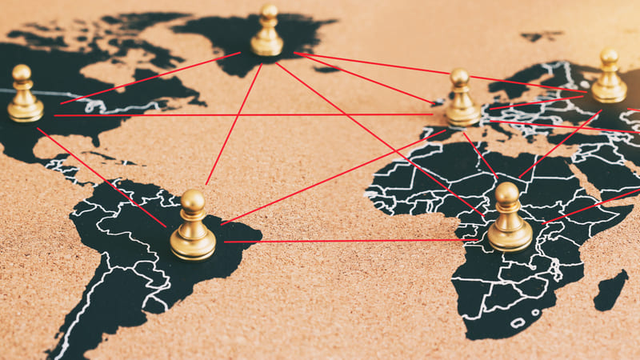
Geopolitics is the study of how geography, political power and economic interests shape relationships between countries. It explains why conflicts break out, why alliances form and why a decision made thousands of miles away can move oil prices, disrupt a supply chain or reshape the job market you're competing in at home.
For professionals working in business, policy or international affairs, this matters because global events increasingly drive commercial decisions, such as where companies choose to invest, which markets they enter and how they price risk. The Master in Geopolitics in Valencia at Universidad Europea pairs geopolitical analysis with global business strategy through real case studies and market analysis rather than pure theory.
What are the key elements of geopolitics?
Geopolitics is shaped by how states exercise power, secure resources, manage trade and respond to new technology. These areas rarely act alone. A shortage in one often triggers a scramble in another, which is what makes geopolitical events so hard to predict and so consequential when they happen.
Power and strategic influence
States protect their interests through diplomacy, defence spending, trade agreements and international partnerships. NATO's expansion after Russia's invasion of Ukraine is a clear example of how a single event can reshape alliances across an entire continent almost overnight.
Resources and economic security
Access to energy, rare earth minerals, agricultural land and critical infrastructure shapes foreign policy more directly than most people realise. Europe's scramble to replace Russian gas after 2022 pushed governments to sign new energy deals with Qatar, Algeria and the United States within months.
International trade and supply chains
Modern economies run on international supply networks that are more fragile than they look. When container ships were stuck in the Suez Canal in 2021, the blockage held up an estimated 400 billion dollars in trade and pushed up prices for ordinary goods like furniture and coffee.
Emerging technologies
Artificial intelligence, cybersecurity, semiconductor manufacturing and digital infrastructure have become strategic assets in their own right. Taiwan's dominance in advanced chip production is one reason the island now sits at the centre of tension between the United States and China.
Why is geopolitics important?
Geopolitics matters because it explains why events in one country can affect jobs, prices and investments in another. A conflict, an election or a new trade policy rarely stays contained. It ripples outward into markets and supply chains that touch almost everyone.
Businesses use geopolitical analysis to manage risk, spotting potential disruptions like sanctions or border closures before they hit operations. When the US placed export restrictions on advanced semiconductors to China in 2022, companies across the tech sector had to rework their supply chains within weeks.
Governments rely on geopolitical assessment to shape foreign policy and national security strategy, while organisations like the United Nations use it to coordinate humanitarian responses in regions affected by conflict or instability.
For individuals, a basic grasp of geopolitics turns confusing headlines into something you can follow. It is the difference between reading that oil prices spiked and understanding why a shipping route thousands of miles away caused it.
How does geopolitics affect everyday life?
Geopolitics shapes daily life in ways that are easy to miss until they show up on a receipt or a payslip. International decisions filter down into markets, jobs and the price of everyday goods.
- Armed conflicts can disrupt energy supplies. Russia's invasion of Ukraine pushed European gas prices to record highs in 2022 and increased household energy bills across the continent.
- Trade restrictions can limit the availability and cost of imported goods. Tariffs on Chinese steel and aluminium have raised construction costs in several countries.
- Political instability can reduce foreign investment. Companies pulled back from operations in regions like the Sahel following a wave of coups between 2020 and 2023.
- Competition for advanced technology can shape employment opportunities. The race for semiconductor manufacturing has driven new factory investment in the United States and Germany, creating thousands of skilled jobs.
- Changes in shipping routes can affect delivery times and manufacturing costs. Houthi attacks on vessels in the Red Sea forced many shipping companies to reroute around Africa in 2024, adding weeks to delivery times.
These examples show that geopolitics is not limited to governments or military affairs. It reaches households, businesses and entire economies through systems that are more connected than they appear.
Geopolitics vs. international relations: what's the difference?
The two disciplines overlap but focus on different parts of global affairs. Geopolitics looks at territory, resources and strategic power, asking how geography shapes the way countries behave and why they compete for influence in certain regions.
International relations looks more closely at diplomacy, international organisations, treaties and cooperation between states. Where geopolitics tends to focus on competition, international relations also covers negotiation, collaboration and global governance, from trade agreements to climate accords.
The two fields inform each other constantly. A geopolitical shift, like a new alliance or a contested border, often plays out through the tools of international relations, such as summits, sanctions or peace talks. For a closer look at how the two compare, our guide on geopolitics vs. international relations breaks down the distinction in more detail.
What career opportunities does geopolitics offer?
Geopolitics opens doors across the public and private sectors, where organisations increasingly need specialists who can interpret international developments and assess strategic risk before it hits their bottom line or their policy agenda.
Career paths include:
- Political analyst
- Geopolitical risk consultant
- International business strategist
- Intelligence analyst
- Foreign affairs adviser
- Policy researcher
- International development specialist
Multinational companies, banks and international organisations all hire people who can explain how a political shift will affect investment, trade and long-term strategy. A geopolitical risk consultant at an investment bank, for example, might assess how an election result in an emerging market could affect currency stability before the bank commits capital there.
If your interest leans toward diplomacy and foreign policy specifically, the Master in International Relations in Valencia includes work placements at embassies, NGOs and international organisations alongside the theory of diplomacy and conflict resolution.
Understanding geopolitics is more than being able to follow the news. It builds the analytical skills to weigh international risk, spot opportunities early and see how political decisions move economies, businesses and entire societies. As global challeng
FAQs
Is geopolitics only about war?
No. Armed conflict is one part of the field, but geopolitics also covers trade policy, energy security, technology competition, climate negotiations, migration and infrastructure.
Can businesses use geopolitical analysis?
Yes. Companies use it to assess whether to enter a new market, where to locate a factory or how exposed a supply chain is to disruption. A car manufacturer deciding where to build a new plant will often weigh political stability and trade agreements as heavily as labour costs.
What skills are useful for working in geopolitics?
Strong research and analytical skills matter most, along with the ability to write clearly under time pressure. A working knowledge of economics and international law helps, and a second or third language opens up roles that involve direct fieldwork or regional specialisation.