
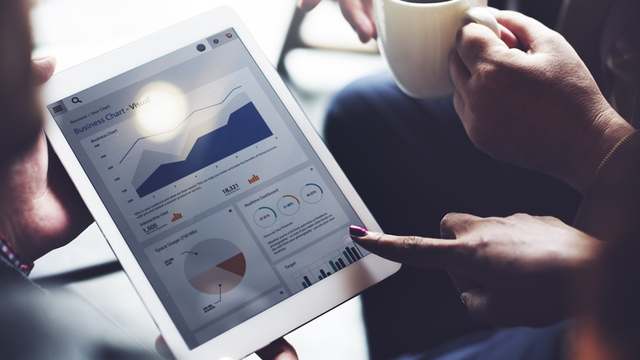
What are web analytics? Definition, tools and careers
Sept. 7, 2026
Web analytics involves collecting, measuring and interpreting data about how people interact with a website or app. It shows where visitors come from, what they click on and where they lose interest.
For businesses, this means trading guesswork for evidence. Web analytics show whether a landing page is converting visitors, whether a campaign is bringing in traffic that matters or exactly where in the checkout process shoppers are dropping off.
If you want to build broader expertise in turning data into business decisions, the Online Master in Business Analytics at Universidad Europea covers data analysis, SQL, Python and business intelligence.
What data can web analytics measure?
Web analytics measures audience, acquisition, behaviour and conversion data, though the exact metrics depend on the platform and how tracking is configured.
Common examples include:
| Data category | Examples | What it tells you |
|---|---|---|
| Audience | Users, new users, returning users | Who is visiting |
| Acquisition | Organic, paid, referral, social and direct traffic | Where visitors come from |
| Behaviour | Page views, engagement, navigation paths | How visitors interact with content |
| Conversion | Purchases, registrations, downloads | Whether users complete valuable actions |
Other useful metrics include conversion rate, engagement rate, exit points and traffic by device. Businesses can also set up events to track specific interactions such as form submissions, video plays or clicks on key buttons, giving a far more precise read on what is working.
The goal is never to collect as many metrics as possible. It is to select the KPIs that answer specific business questions and connect straight back to ROI, since a metric that does not tie to a business outcome is just noise.
How does web analytics work?
Web analytics works by recording user interactions and turning those events into structured data that can be analysed.
A typical process has four stages. First, tracking is implemented on the website. Next, interactions such as page views, clicks or purchases are collected. The analytics platform then processes this information and presents it through reports or dashboards. Finally, analysts interpret the data and translate it into actions, whether that means fixing a broken checkout step or doubling down on a channel that is quietly outperforming the rest.
Tools such as Google Analytics 4 use event-based measurement to record interactions. Google Search Console provides information about a site's performance in Google Search, while tools such as Hotjar focus on behavioural insights through features including heatmaps and session recordings, showing exactly where a visitor's cursor lingers or where they give up scrolling.
Tracking must also be configured in line with applicable privacy requirements and user consent settings. The quality of the analysis depends not only on the tool but also on how accurately events, conversions and other measurement parameters have been defined, since even the best platform gives misleading answers if it is tracking the wrong things.
What are the most popular web analytics tools?
The most widely used tools each serve a different analytical purpose.
Google Analytics 4 measures website and app interactions, traffic acquisition, engagement and conversions. It is particularly useful for understanding user journeys and connecting online activity with defined business objectives, such as tracking whether a visitor who reads three blog posts is more likely to sign up than one who reads a single page.
Google Search Console focuses on organic search performance, providing information such as search queries, clicks, impressions and average search position, making it the go to source for understanding exactly how people find a site through Google.
Hotjar provides behavioural analysis through heatmaps, session recordings and feedback features. It can help identify interaction patterns that conventional quantitative metrics do not explain, like why visitors keep scrolling past a call to action without clicking it.
Semrush combines SEO analysis with competitor research and keyword data. It is particularly relevant when web analytics needs to be considered alongside search visibility and acquisition strategy, since it shows not just how a site is performing but how it stacks up against competitors targeting the same audience.
How do businesses use web analytics?
Businesses use web analytics to identify problems, measure performance and decide where to focus resources.
Retailers can analyse product views, add to cart events and checkout behaviour to pinpoint where customers abandon a purchase. A publisher can compare engagement across content types, while a marketing team can compare acquisition channels to see which campaigns convert.
Connecting this data to revenue and costs also allows teams to assess financial return, turning digital performance into a figure the wider business cares about.
Web analytics vs. business analytics
Web analytics focuses primarily on digital behaviour, while business analytics examines data from across the whole organisation to support broader decisions.
For example, web analytics can show that visitors arriving from social media convert at a higher rate than those from paid search. Business analytics takes that finding further, combining it with sales, customer, financial and operational data to work out what it means for revenue and strategy.
The two disciplines overlap but sit at different levels. Web analytics is a specialised source of business intelligence, while business analytics takes a wider view of how the organisation is performing overall.
For professionals who want to work with data across different business functions, the Master in Business Analytics and Business Intelligence at Universidad Europea uses practical case studies covering areas including finance, marketing, logistics, risk, insurance and human resources.
What careers use web analytics skills?
Web analytics skills open doors across several digital and data focused careers.
A web analyst lives and breathes this discipline daily, configuring measurement systems, analysing website performance, building reports and spotting opportunities others might miss.
A digital marketing specialist leans on analytics to judge what's working across SEO, paid advertising, email and social media. Being able to connect channel performance to KPIs is what separates good performance marketing from guesswork.
A conversion rate optimisation (CRO) specialist digs into user behaviour to figure out which changes will nudge more visitors toward completing the action that matters most.
A data analyst works with a wider pool of data but often draws on web analytics as one piece of the puzzle when studying customer behaviour, digital performance or commercial activity.
An e-commerce manager relies heavily on this data too. Their day-to-day can include tracking the customer journey, analysing KPIs and finding new ways to lift online sales. You can learn more about the role of an e-commerce manager and the analytical skills it requires.
How can you build a career in web analytics?
Building a career in web analytics takes a mix of analytical thinking, digital measurement know-how and genuine business sense.
That means getting comfortable with core metrics and KPIs, data collection, event tracking, conversion funnels and attribution. Familiarity with tools such as Google Analytics 4 and Google Search Console goes a long way too, while SQL, data visualisation and statistical analysis become increasingly valuable once you're working with larger, messier datasets.
The right learning path depends on where you want to end up. If digital marketing is the goal, the Online Master in Digital Marketing at Universidad Europea includes a dedicated Analytics and KPIs module covering performance measurement and data-driven decision-making.
FAQs
Are web analytics the same as Google Analytics?
No. Google Analytics is a specific analytics platform, while web analytics is the broader discipline of collecting and interpreting website data. Google Analytics is one tool used for this purpose.
Are web analytics only useful for e-commerce websites?
No. Any organisation with a website can use web analytics to understand traffic, engagement and conversions. It is relevant to publishers, service businesses, educational institutions, charities and many other organisations.
What is the difference between a metric and a KPI?
A metric is a measurable value, such as page views or sessions. A KPI is a metric selected because it directly reflects progress towards a specific business objective.